Let me start by saying: I loved the first part, Pink Triangle. This WW2 book had everything I love in this genre, so I felt honoured and absolutely thrilled when the author reached out and asked me if I would be willing to read her book before its official release. Getting back to one of my favourite stories? How could I say anything but “YES!”?
I started reading as my daily schedule left me with a breather and I finished the book in one go. It was impossible to put down once I embarked on this adventure.
I greatly recommend reading Pink Triangle before you dive into Rougue Offizier though, because the latter starts right where the first novel left off. Follow this link to check out my Pink Triangle review:
Now, let’s continue with some basic information about the book.
About Rougue Offizier
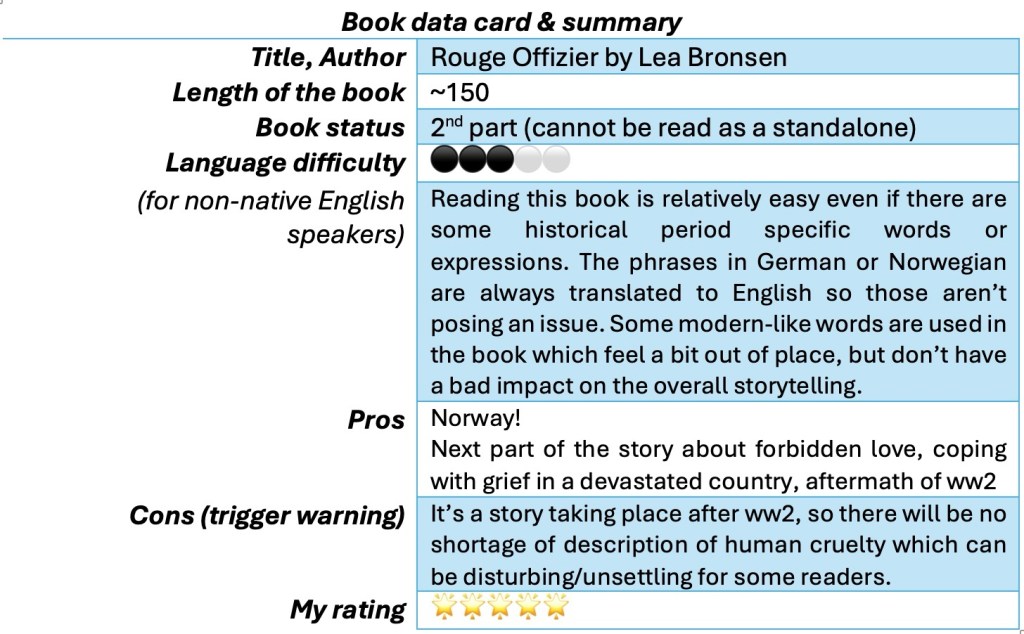
Cover and Blurb (Goodreads)
Norway, May 1945.
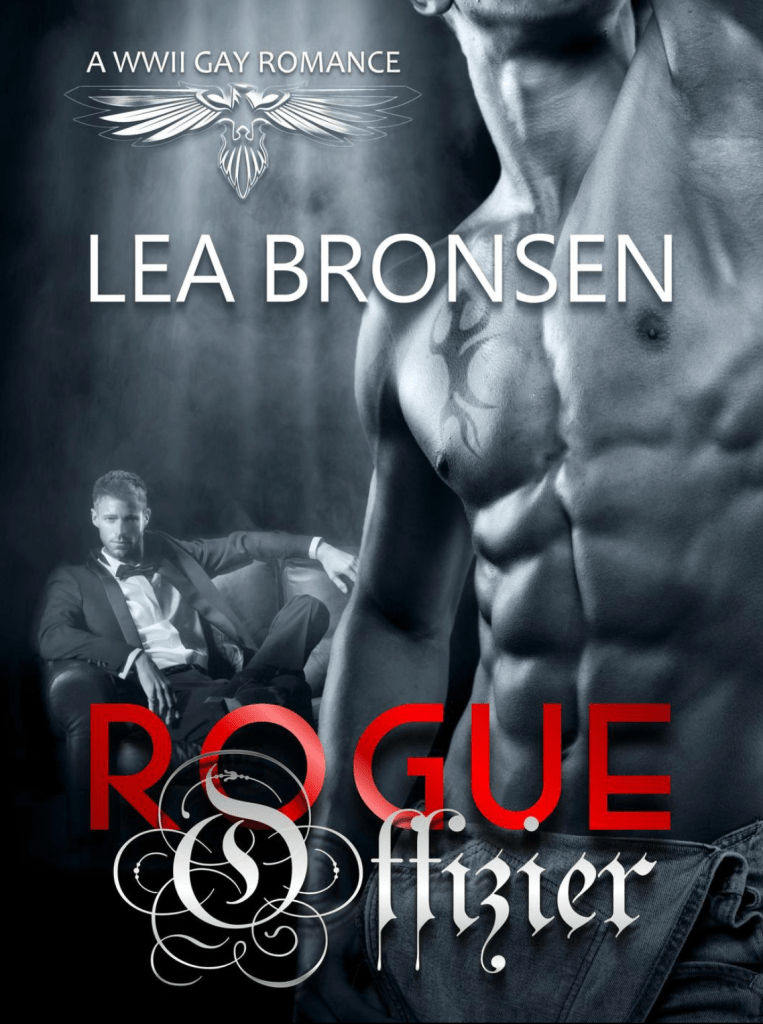
The manhunt for war criminals is on. Now that the 5-year German occupation is over, Commander of the security organizations Stefan Heimlich is hiding from the lynch mob. His young Norwegian lover has helped him escape, but it’s only a matter of time before his identity is revealed. While leaving Stefan alone in the mountains breaks Paul Hartmann’s heart, the call for duty is strong. His newly freed country needs him to start law studies and bring justice to a starved and oppressed population.
The two men long for each other, but the stakes are high, too high. Will they ever dare to give love a chance?
Main & Supporting characters
(Minor Spoilers!)
Paul Hartmann
Paul is the same young man he was in the 1st part. He is untainted, someone even the worst period in human history couldn’t break. I believe he remains strong for Stefan. If Paul fails to be the anchor Stefan needs in his voluntary exile, the other man will lose his humanity, and sooner rather than later, his life.
Stefan Heimlich
His immense character development was stunning, nearly unbelievable in the 1st volume, but he’d shown to the readers that he’s not a monster, he can transform back to a tortured human being when he’s shown the error of his ways. When he’s left alone in the wilderness to fend for himself, self-pity and the weight of his past actions catch up to him, making him somewhat relapse in his character development, but when he is presented with a choice to redeem a fragment of his long-lost humanity and honour, he doesn’t hesitate to do the right thing.
Their relationship
Due to their circumstances, Paul and Stefan spend most of their time apart as the book’s events progress. This makes them re-evaluate their relationship. Without the closeness and the constant reassurance of their feelings and the strength of their relationship, both begin to falter and think of themselves as undeserving of the other.
Let’s be honest, this is an unhealthy relationship – especially in the case of Stefan –, measuring their own value based on the presumed opinion of the other. It’s not OK, not in the slightest, but it makes this story, their relationship believable, real. Their struggles are numerous, but the willingness is there to transform a codependent, almost addiction-like relationship into a healthy, stable partnership.
Paul’s mother & father
Paul’s mother is only mentioned on the pages, but the damage she’d done to his son lingers. Paul refuses to remain under her influence though, and while there’s no real forgiveness on his part, he tries to stay at least neutral towards her.
The boy’s father continues to be as supportive as he was in the 1st volume even if he has a difficult time accepting his son’s choices. He voices his worries but never tries to change Paul.
Kris
He’s a new and interesting character in the novel, a complete opposite of Paul, making the two fast friends in spite of their differences. And… I never really liked him. It wasn’t because he was a threat to Stefan and Paul’s relationship (he really wasn’t), his personality just didn’t agree with me. He’s not a bad person and I understand his motivations, why he acts the way he does, and I can’t say that I’d do anything different if I were in his shoes, but I wouldn’t pick someone like him as a friend in real life either.
The story
(Minor Spoilers!)
There is much less happening in this book than it was in the 1st volume, therefore, the reflection on a 5-year war, and the consequences of their own actions (Stefan) or inaction (Paul) gets more accentuated. Every event in this book serves as a catalyst for coping in a new, hopefully peaceful world and dealing with their emotions. The physical distance (Oslo versus mountains) and the time spent apart is a parable of their emotional distance. As they find their way back to each other, their insecurities melt away and they find solid ground and reassurance in the feelings of their beloved.
Favorite quote
I picked this quote, because it best represents the unhealthy nature of Stefan and Paul’s relationship. Stefan defines himself based on the feelings of Paul, and the boy would let him take everything. This is the foundation they start off and build something absolutely balanced on.
“He felt secure. Paul would always be there for him, always take care of him. Even when he grew old and was bedridden and sick, Paul would be by his side. He knew, because he had seen it in the boy’s eyes. They always told the truth, and they always conveyed the sort of heartwarming feelings that made Stefan wonder if the boy was sane, for how could anyone in his right mind like him—really, honestly like him? But Paul did, he really, honestly liked Stefan. What a mystery.”
Conclusion
I liked this book as much as the 1st volume, it was everything I expected from it. It had thrilling adventures, horrible actions enforced by the deepest, darkest pits of human nature, pure feelings overcoming every horrible deed and moving mountains, self-redemption, self-acceptance. I couldn’t wish for more.
Notes
Source of cover image: unsplash.com (Michael Fousert)
 S.A. Locryn's Hundred Moors